
Scotland faces apprenticeship recruitment crisis as employers pull back from hiring
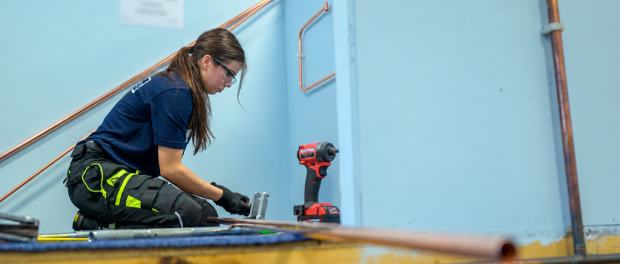
Rising training costs, financial risks and lack of government support threaten the next generation of skilled plumbing and heating professionals.
Scotland risks a growing apprenticeship recruitment crisis as rising costs, financial pressures and inadequate employer support are leading plumbing and heating businesses to reconsider whether they can afford to train the next generation of skilled professionals, according to a major new report from SNIPEF, the Plumbing and Heating Federation.
The Forgotten Side of the Apprenticeship Triangle, which has involved or secured the backing of more than 350 plumbing and heating businesses across Scotland, warns that declining employer participation could weaken the skilled workforce needed to protect public health, maintain safe homes, build housing and deliver low-carbon heating.
The research reveals a concerning gap between past recruitment and future intentions. While 84% of surveyed employers had recruited apprentices in the previous five years, only 53% of those expressing a definite view expected to recruit over the next three years.
Rising wage costs, more than 1,000 hours of mandatory college attendance, substantial supervision requirements and limited productivity during the early years of training are placing increasing financial pressure on employers and discouraging apprenticeship recruitment. These challenges are compounded by the risk of losing newly qualified apprentices after businesses have invested significant time, money and resources in their development, often with little opportunity to recover that investment.
The financial commitment is substantial. Based on nationally agreed apprentice wage rates and a 40-hour working week, SNIPEF estimates that employing one plumbing and heating apprentice costs approximately £82,500 in wages over four years.
Some 78% of respondents rated Scottish Government apprenticeship support as inadequate or poor, while 93% identified increased funding as an incentive to recruit. Almost two-thirds believed training costs should be shared equally between employers and government.
Yet employers have not lost faith in apprenticeships. More than four in five support the established four-year training model, recognising its importance in developing the competence and judgement needed to work safely.

Fiona Hodgson, Chief Executive of the Plumbing and Heating Federation (SNIPEF)
Fiona Hodgson, Chief Executive of SNIPEF, said: “Scotland cannot afford to take its future skilled workforce for granted. Apprenticeships provide a vital route into employment, but without employers willing and able to create those opportunities, there are no apprenticeships.
“Our research shows that employers remain committed to training the next generation. What is changing is their ability to afford that commitment. They pay the wages, provide supervision, absorb lost productivity and carry the financial risk over four years, yet receive too little direct support towards those costs.
“This is not simply a problem for plumbing and heating businesses. It affects every community that depends on safe water and heating systems, new housing and the transition to low-carbon heating.
“If we continue to overlook employers, we risk losing apprenticeship opportunities and skilled capacity that could take years to rebuild. The Scottish Government must recognise that supporting apprenticeships means supporting the businesses that provide them.”
For many smaller businesses operating on tight margins, these costs can determine whether an apprenticeship is offered at all. Rural and island employers face additional travel, accommodation and college access pressures.
Brian Warrender, Managing Director of B&B Warrender Limited in Fordoun, Aberdeenshire, said: “We believe strongly in apprenticeships and see training young people as an investment in our future. But taking someone on is a major four-year financial commitment.
“We pay wages during college attendance, provide experienced staff to supervise apprentices and accept that they cannot be fully productive initially. Even after making that investment, there is no guarantee they will stay with us once qualified. We want to keep training, but without practical support, the costs and risks are becoming increasingly difficult to justify.”
Ross Butter, of Jim Butter Plumbing and Heating in Dundee and Vice President of the SNIPEF Dundee & District Association, said: “The four-year apprenticeship has served our profession well for generations. Plumbing and heating is skilled, safety-critical work, and it takes time, experience and proper supervision to develop someone who can work competently and independently.
“We cannot afford to see that standard weakened or the number of employers willing to train reduced. If businesses stop taking on apprentices today, the consequences will be felt for years to come. Scotland needs skilled professionals to maintain essential services, keep homes safe and install the heating systems of the future.”
Colin Peacock, Joint Managing Director of John Crawford & Co (Mechanical) Ltd in Glasgow, said: “We currently employ six apprentices because finding experienced, qualified plumbing and heating professionals is becoming increasingly difficult. If we cannot recruit the skilled people we need, we have to develop them ourselves.
“But that is the dilemma. Training apprentices is essential to securing the future of our business, yet the wages, college attendance and supervision costs make us think twice about taking on more. We are caught between a rock and a hard place.
“Government talks a great deal about the importance of apprenticeships, but if it wants businesses to keep creating these opportunities, it needs to help share the cost of training the next generation.”
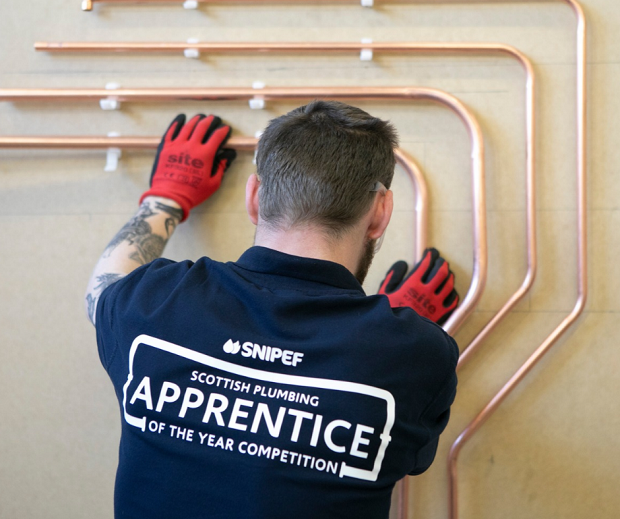
SNIPEF argues that current funding arrangements do not sufficiently recognise the demands of four-year, safety-critical apprenticeships, where competence develops through sustained college education and supervised workplace experience.
The report makes four recommendations.
- Targeted financial assistance towards wages during mandatory college attendance and early supervision costs.
- Recognition of nationally agreed apprentice wage rates in public grants and employer support schemes
- Ensure that public contracts requiring businesses to recruit or train apprentices as part of tender conditions explicitly recognise, cost and fund those commitments.
- The plumbing and heating profession to examine flexible, accredited routes for people with relevant skills and experience while maintaining established competence and safety standards.
Fiona Hodgson added: “We are not asking for standards to be weakened or employers to be relieved of their responsibilities. We want a fairer, more sustainable partnership.
“Scotland’s housing, infrastructure and low-carbon ambitions depend on skilled people, and those skills depend on employers prepared to train them. The time to act is now, before declining confidence becomes a lasting loss of apprenticeship opportunities.”
SNIPEF is seeking meetings with Scottish ministers, public bodies and parliamentarians to advance the recommendations and secure greater recognition of employers’ essential role in apprenticeship training.
Key findings of the report
- 84% of employers had employed apprentices in the previous five years.
- 53% of respondents were now expecting to recruit apprentices in the next three years.
- 78% rated Scottish Government support for apprenticeships as inadequate or poor.
- 93% identified increased funding support as an incentive to recruit apprentices.
- 81% supported the established four-year plumbing and heating apprenticeship model.
- 63% believed apprenticeship training costs should be shared equally between employers and government.
- £82,500 is the estimated four-year apprentice wage cost, based on nationally agreed wage rates and a 40-hour working week, excluding wider employer costs.
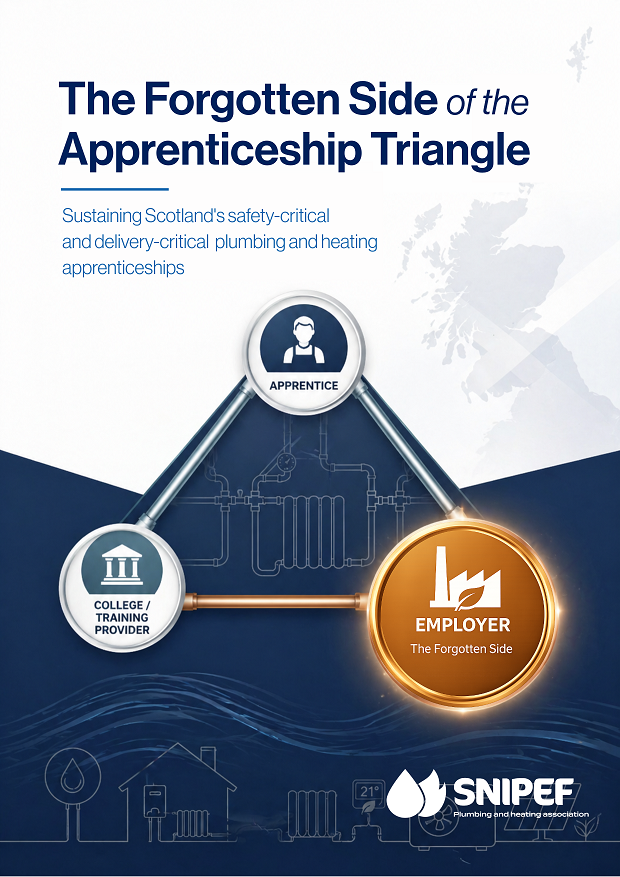
Over 350 plumbing and heating employers contributed to and supported the report and its findings
Leave a comment